
Accurate details make choosing easier
Have height, weight, foot length, experience and intended use ready before booking. Exact equipment, sizes and availability are always shown in our rental system. We check details during preparation.
Sizing guides for skis and snowboards
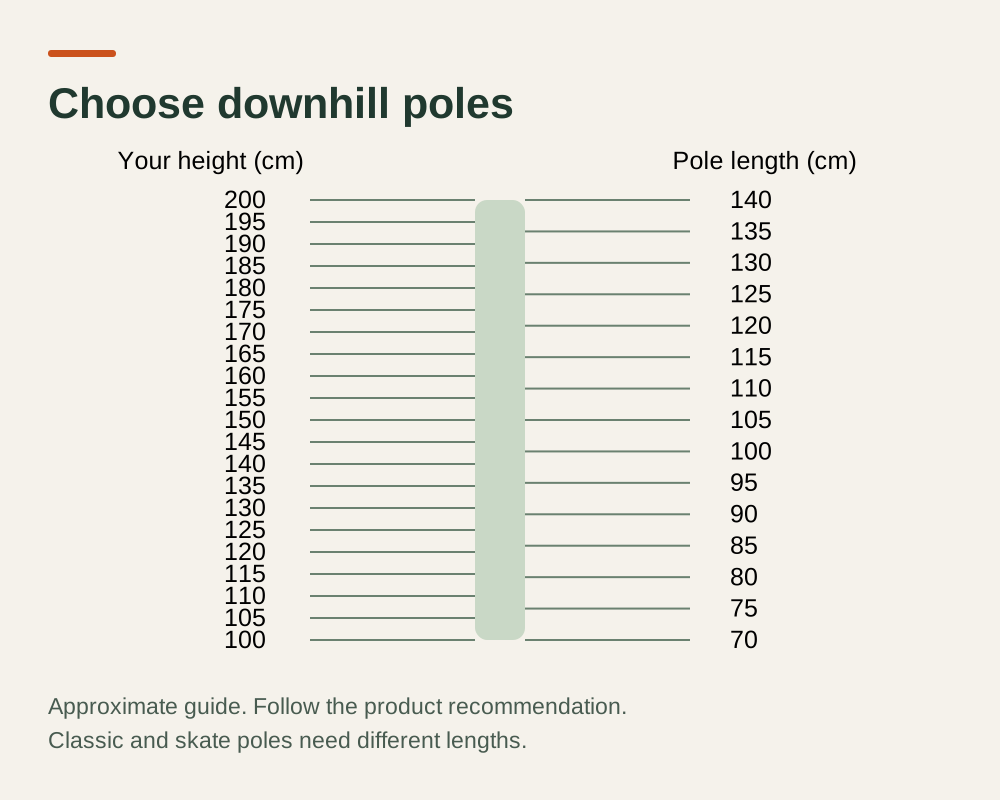
Compare the illustrations and open them larger if helpful. They are a starting point: weight, model, style and boot size affect the final choice.
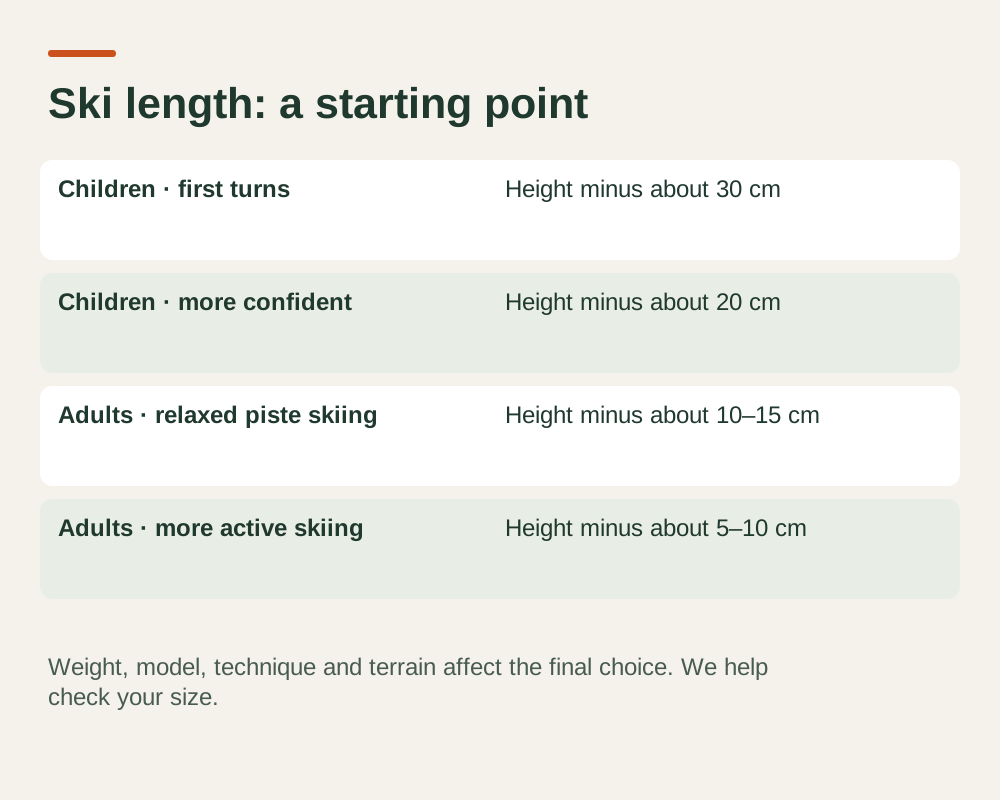
What ski length should I start with?
Children
Beginners may find chest-height skis easier to steer, around 30 cm shorter than the child. With more confidence, chin-height skis, around 20 cm shorter, are a common starting point.
Adults
Easy-turning piste skis are often 10–15 cm shorter than the skier. For more active skiing, start around 5–10 cm shorter. Longer skis can add stability but demand different skills.
Carving and slalom often use shorter skis. All-mountain and freeride may need more length depending on model and conditions. Consider weight too; we help find a suitable combination.
Snowboards: consider more than length
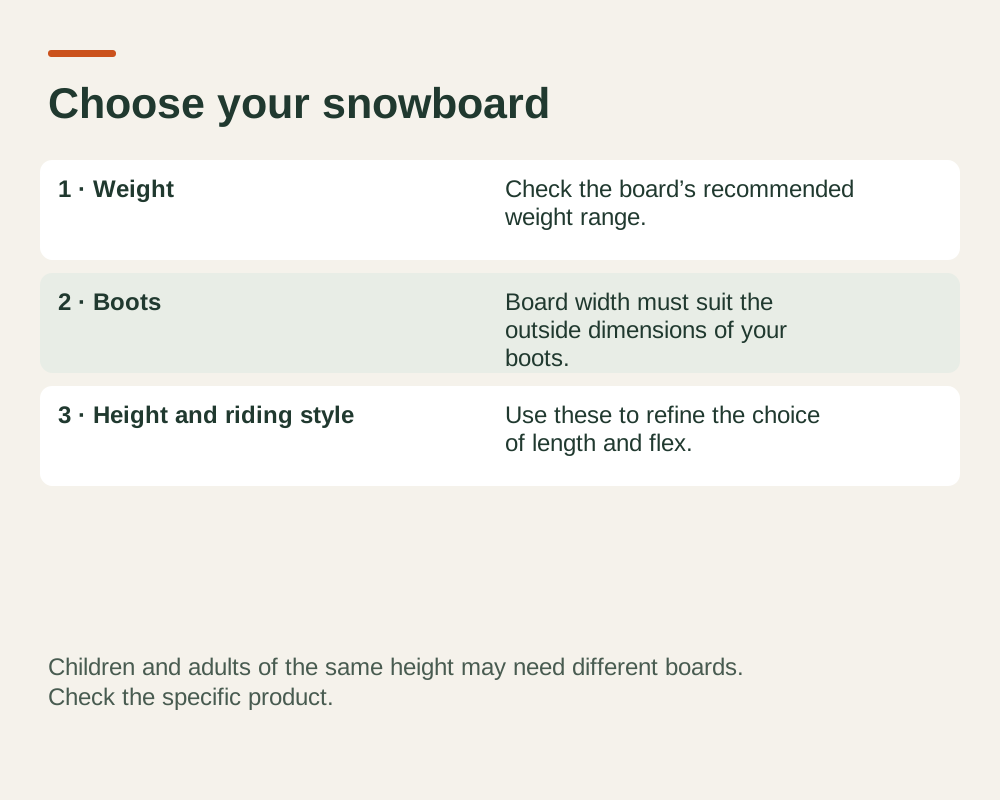
Use the guide as a starting point for children and adults. Check the board’s weight range and width against your boots. People of the same height may need different boards.
The full name shows which equipment the range describes
Rolig, Roligare and Roligast are not standalone difficulty ratings. The first part identifies the equipment; the range distinguishes options within that family. A package may therefore combine different ranges when they work better together.
How the downhill ski ranges feel
For downhill skis, the ranges describe handling and the response, stability and precision provided.
Easy and forgiving
For confident, easy-turning, relaxed skiing. A good choice for gentle holiday skiing and putting your energy into the experience.
More stability and response
For more active skiing, varied speeds and stronger edge grip without unnecessarily demanding equipment.
More precision and power
For experienced skiers who create speed and pressure and want a more precise ski. Roligast means features suited to those who can use them, rather than extreme equipment.
Measure your feet for ski and snowboard boots
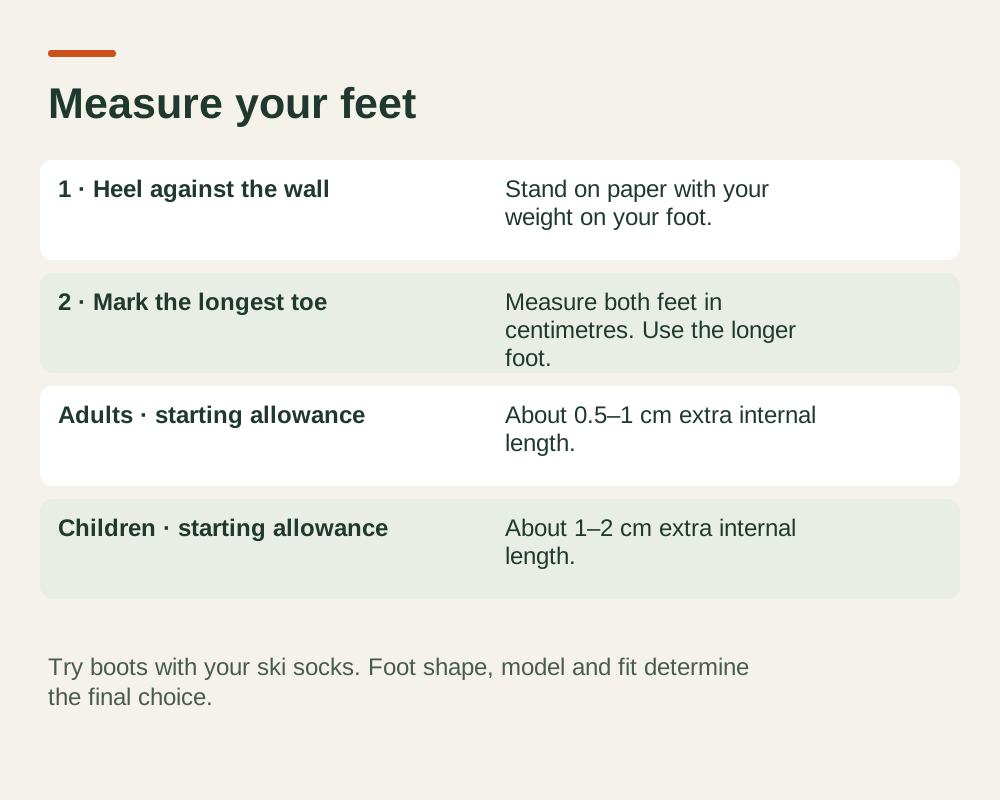
- Stand with your heel against a wall on paper, putting weight on your foot.
- Mark the longest toe and measure in centimetres.
- Measure both feet and use the longer measurement.
- As a starting point, adults normally choose 0.5–1 cm extra internal length, children 1–2 cm. At staffed collection we help check the fit.
Different equipment needs different details
This page helps explain your choices, but equipment, variants, prices and availability are selected in our rental system. The website has no separate product selector.
Ski terms that help you choose
Length is only part of the choice. These features help explain how different skis can feel.
- Length
- Shorter skis can feel easier to handle; longer skis can offer more stability. Your weight, skiing style and the ski’s construction also affect the choice.
- Waist width
- The ski’s width underfoot. A narrower ski often changes edges more quickly on piste, while a wider ski offers more float in soft snow.
- Turn radius
- A measure describing the ski’s natural turning arc. A smaller radius suits shorter turns and a larger radius longer arcs. Technique and speed influence the turns you actually make.
- Stiffness and flex
- How much a ski bends under load. A softer ski is often more forgiving; a stiffer ski can offer more support and response but asks more of the skier. Flex also describes a ski boot’s resistance when you bend forwards.